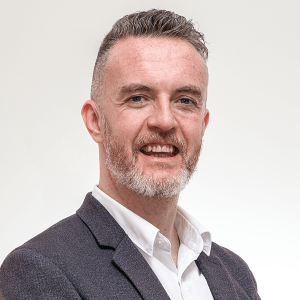
UFOs, sharks and spies, oh my: Kleber Mendonça Filho on the inspirations that underpin The Secret Agent
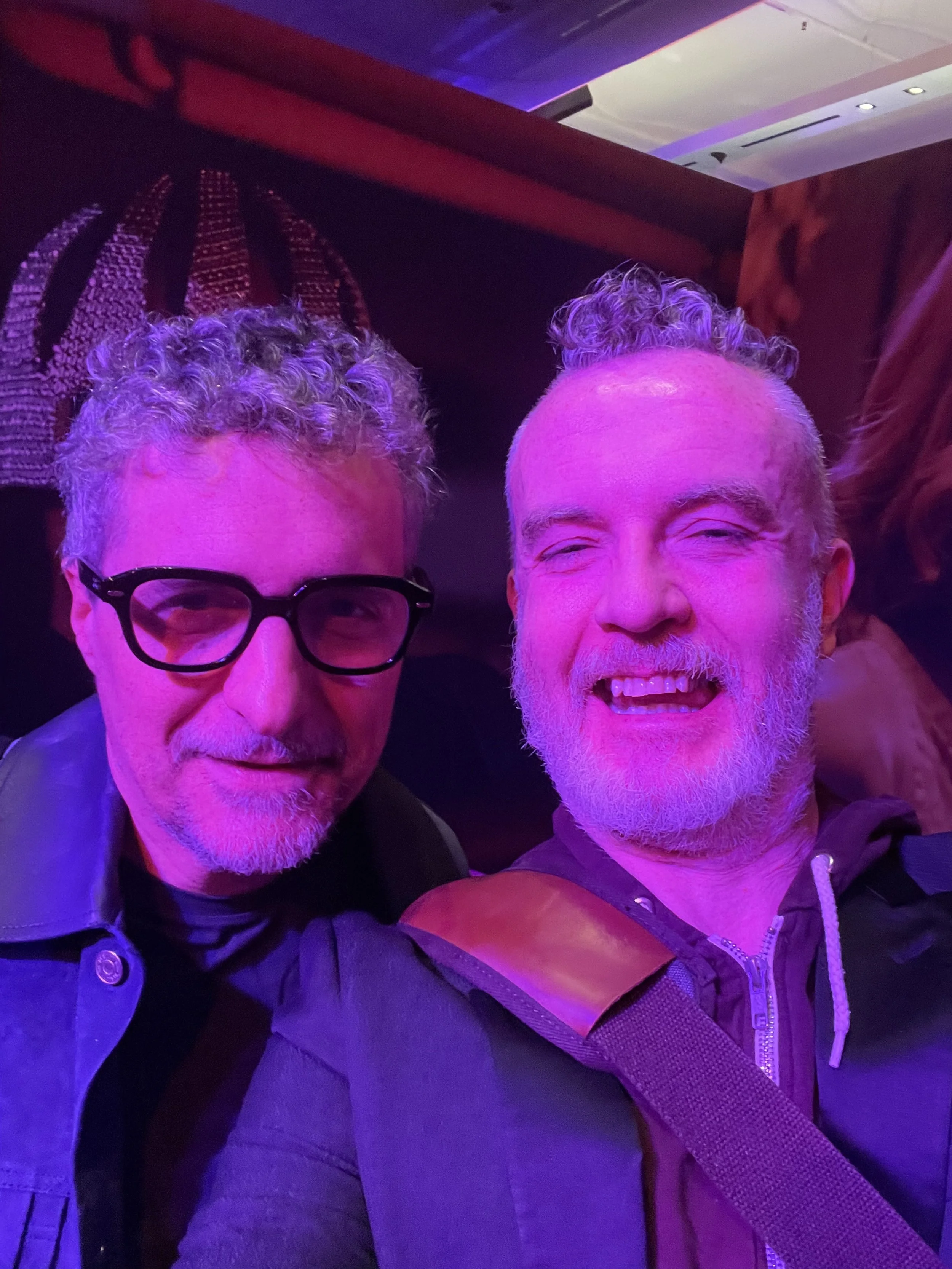
Photo by Stephen A. Russell
Cinema is life to The Secret Agent’s writer and director, Brazilian critic-turned-filmmaker
Kleber Mendonça Filho.
Born in Recife in November 1968, under the military dictatorship of Artur da Costa e Silva, he was dazzled, as a young lad, by the striking film posters that lined the foyer walls of the city’s then-dazzling picture palaces. Places Mendonça Filho lovingly recalls with melancholy beauty in his 2023 documentary, Pictures of Ghosts.
“I remember seeing the poster for The Omen and thinking it was really creepy,” he recalls as we sit in the belly of the Town Hall during the Sydney Film Festival, bathed in suitably cinematic pink light. “There was this shape of a child with the shadow of a jackal.”
Cinema casts a long shadow for Mendonça Filho, who has a photographic memory. “I associate facts with the timestamps of film and music, particularly from the ‘80s,” he says. “Cinema is packed with a sense of time. Each and every film is a document, whether it’s a silly little comedy like Porkies, or something by Pasolini.”
Mendonça Filho was similarly awestruck by the devastatingly effective one-sheet for Jaws, which opened in Brazil on Christmas 1975 when Mendonça Filho was seven. “I still remember the lobby cards,” Mendonça Filho says. “One was a close-up of the first victim in the water, and the other was the three men on the boat, the Orca.”
Steven Spielberg’s breakout hit ran for years in Recife. “My uncles went to see it, and so did my mum, and they relayed the whole film to me, then I’d go to school and do the same thing with my friends,” he chuckles.
“I begged my mum to get me the Peter Benchley novel, the first book I ever read, then I was asking her all these questions, because the book has many sexual situations. Then she said, ‘I don’t think you should be reading this.’”
The road to Cannes
Blending soap operatic elements with political satire, noir, and, memorably, monster movie elements, The Secret Agent is a sprawling, shaggy dog story with many moving parts, including some borrowed from Mendonça Filho’s childhood memories.
He didn’t get to see Jaws until 1983, watching it on VHS while living in England as a teenager. While there, the family took regular train trips into London to watch blockbusters at Leicester Square, a place he still adores.
“I remember watching Die Hard there, Full Metal Jacket or Raiders of the Lost Ark. Then, as you grow older, you understand that that’s not the only thing cinema is about. It can be about many things.”
Before that, Mendonça Filho would sit in his Recife bedroom scribbling drawings of how he imagined Jaws might play out. Just like Fernando (Enzo Nunes), the estranged-by-necessity young son of The Secret Agent star Wagner Moura’s ‘Marcelo’, a man of many names.
A former engineering professor, Marcelo has fallen foul of a corrupt government minister. On the run from hired henchmen after a hit is put out on his head, necessitating laying low in Recife, a coastal city stalked by real-life sharks, he arrives in a snazzy yellow VW Beetle.
Mendonça Filho wrote The Secret Agent specifically for Moura, whom he’d been wanting to work with for ages.
“Turns out that Wagner is everything I thought he would be,” Mendonça Filho says. “He’s not only a great actor; he’s also a great human being and a good friend now. I have a good radar, and I haven’t made many mistakes in terms of going with the wrong people.”
Moura sank into the role. “He came to Recife one month early to soak in the city, and we rehearsed the hell out of it, shooting for two months,” Mendonça Filho says.
“It was an electric process. Then Cannes invited us seven hours after they saw the film, and now I’m in Sydney, having a great time talking to you. It’s insane.”
Mighty women
Marcelo is embraced by mighty durry-huffing matriarch Dona Sebastiana (Tânia Maria), whose Barbary Lane-like home is chock full of such political refugees, hiding from the malignant powers that be.
“They’re all hanging out in Sebastiana’s living room, and how the hell am I going to shoot that?” Mendonça Filho guffaws. “They’re everywhere, then there’s the couch, the table, the cat, the dogs, the little girl sleeping and the television. Everything should flow naturally and feel unexpected, and that’s the interesting challenge I want, as a director. I want to shoot every scene, not hand it over to the AD.”
Memes of the memorable Maria smoking have become an internet fave since The Secret Agent debuted at the Cannes Film Festival, where it was nominated for the Palme d’Or, with Moura winning Best Actor and Mendonça Filho Best Director.
“I really like strong older women,” Mendonça Filho says. His mesmerising film Aquarius is centred on the magnificent Sonia Braga, who plays an indomitable woman resisting the insidious property developers intent on demolishing her home. Braga also appears in the wild dystopian fable, Bacurau, in which Maria was an extra.
“Tânia was so awesome, real and peculiar, such a strong character that I couldn’t help but write Sebastiana for her,” Mendonça Filho says. “Tânia wasn’t even in Cannes, but her character became quite the sensation.”
For Mendonça Filho, Sebastiana is a tribute to every powerful woman who has resisted tyranny.
“In the Soviet Union, women are more present, as a historical narrative, like Lyudmila Pavlichenko, the sniper who killed 300 Nazis, but not so common elsewhere,” he says. “In my mind, Sebastiana found herself in a situation like this, and she’s still dealing with that.”
Moura, too, conveys so much in his posture or a pained look.
“The main idea is that no film or book will ever close the conversation on any subject,” Mendonça Filho says. “Many films behave as if they really got around to having the last word, which is simply not possible. I’m fascinated by telling a story that implies that there is so much more behind this.”
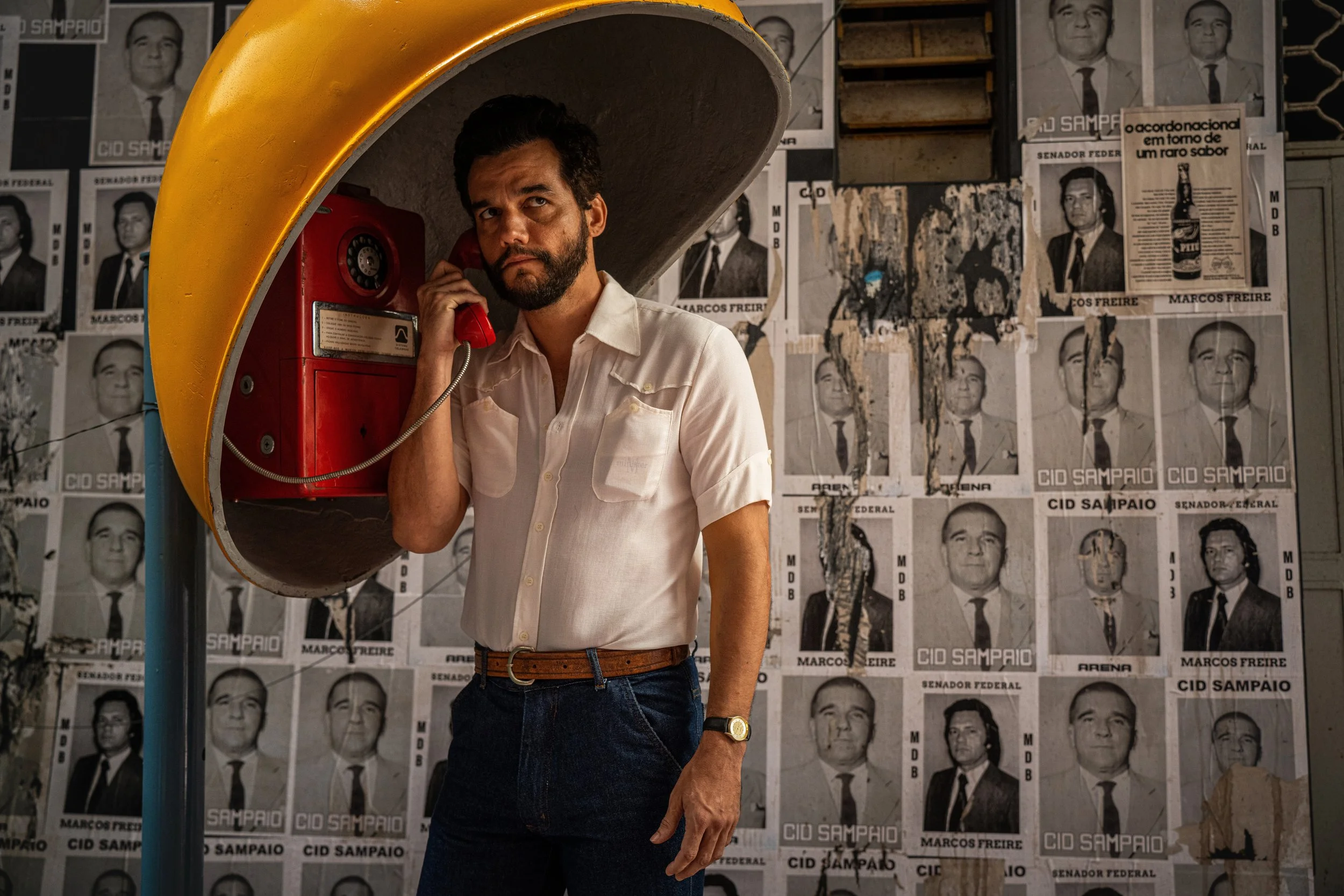
Photo by Victor Juca- © Victor Juca
Fairy tales and truth
That includes the mystery of a chomped leg, discovered in the belly of a Jaws-like shark. Later, it will become a stop-animated beast, bothering horny gay men getting busy in a Recife beat.
“I thought we should go with something clearly retro, almost like a Ray Harryhausen movie,” Mendonça Filho says of this remarkable sequence, created by Amsterdam-based Viking Film. “It was so much fun visiting the studio and seeing the leg model with its little hairs. They asked if it could kick a guy in the ass, and I said, ‘Sure, that’s a good idea.’”
As with every element of The Secret Agent, what plays as dark comedy contains multitudes.
“I like the tension that exists in the story, because the hairy leg, as absurd as it is, is actually a code for police violence,” Mendonça Filho says. “At night, you have these men having consensual fun in the park, kissing, fucking or sucking each other’s dicks. Then suddenly the police arrive, and while they don’t shoot anyone, they beat the crap out of them.”
Mendonça Filho would witness firsthand how stories like this would be twisted out of shape by the paper he worked for as a critic.
“Some of these men were taken to the hospital, and often they won’t tell the doctors what happened,” he says. “They’ll say they fell or had a disagreement with a friend. And journalists won’t say exactly what happened, either, so they came up with code like ‘The hairy leg attacked again last night,’ right?”
The same was true when two people were electrocuted at a music festival organised by the company that owned the newspaper.
“The editor comes in and says, ‘This accident never happened,’ so that was so educational for me,” Mendonça Filho says. “So everything that you see in the film that comes out in the newspapers is either fantasy or they get all the information wrong. That’s how I see most of what comes out in the newspapers today.”
Of life and lemons
Truth, even in fiction, matters to Mendonça Filho, with the connective tissue of cinema stringing all these stories together. And there are strange echoes everywhere. While Mendonça Filho purposefully nodded to Spielberg’s Jaws, another of the American director’s classic movies unexpectedly cropped up.
“I have the pleasure of composing wide screen, and I get a kick out of being able to afford the Panavision anamorphic lenses,” Mendonça Filho says. “I looked up the CV of one of the lenses we used in The Secret Agent, and you know where that lens was in 1977? In Wyoming, on Close Encounters of the Third Kind.”
Mendonça Filho remembers watching the film at his favourite Recife cinema, the Veneza, in 1978. “It was a very tough time in our family, because my mother was going through cancer, and my young uncle, who always felt like an older brother, kept taking us to the cinema. AT the time, it felt like paradise. I only learned what was behind this many years later. The family was trying to keep us looking the other way.”
Great Australian director Peter Weir also worked extensively with Panavision, showing up to The Secret Agent’s local premiere in the glittering surrounds of the State Theatre during Sydney Film Festival.
“I can’t believe he came to see the film,” Mendonça Filho says, clearly touched. “I was exposed to a lot of Australian cinema when we lived in the UK. I loved The Cars That Ate Paris, The Last Wave and Gallipoli. I also loved Razorback, The Long Weekend, and the first two Mad Max films. The second is a fucking masterpiece.”
Their unique vision instilled something in Mendonça Filho. “One thing that struck me about Australian cinema is that, superficially, somebody might mistake them for American films, but they definitely were not. They were shot in Panavision and went hard. And when they were tender, they weren’t corny.”
A spirit that informs The Secret Agent, which is unafraid of exploring Brazil’s darkest hours, while never losing sight of its brightest. “Brazil is an incredibly beautiful, poetic country full of violence and inequality,” Mendonça Filho says. “But look at the state of the world. It’s the same all over. Cinema can show us a richer, more complex picture. Of love and joy, eroticism and violence, good or evil. It’s all part of life.”
A life Mendonça Filho lives to the fullest. “I lost my parents very early, and it’s a tragedy, but then I have two kids, and it’s joyful. You just gotta get on with it. I hope I don’t sound like a Pollyanna. It’s just my outlook on life, you know?
The Secret Agent is in Australian cinemas from January 29